
Building Resilience in the Himalayas: A Vision for Self-Reliant Villages
Reviving Rural Livelihoods in the Himalayan Region, the mountains of Uttarakhand hold more than just breathtaking scenery; they hold a rich culture and deep-rooted traditional knowledge. Yet, for many families in our rural communities, the reality of mountain life is marked by persistent economic challenges. Between fragmented landholdings, limited market access, and declining agricultural productivity, the path to growth often feels restricted.
At Dhar Kshetriya Vikas Sansthan (DKVS), we believe that sustainable rural livelihoods are the foundation of true community development. When a family can build a stable income right in their own village, migration ceases to be a desperate necessity and social bonds are strengthened. Our mission is to restore that sense of dignity and self-reliance to every corner of the Himalayas. (Reviving Rural Livelihoods in the Himalayan Region)
🌿 Introduction
The Himalayan region of Uttarakhand is rich in culture, natural resources, and traditional knowledge. Yet, rural communities in these mountainous areas face persistent economic challenges. Limited employment opportunities, fragmented landholdings, declining agricultural productivity, and lack of market access continue to restrict growth. (Reviving Rural Livelihoods in the Himalayan Region)
Dhar Kshetriya Vikas Sansthan (DKVS) believes that sustainable rural livelihoods are the foundation of long-term community development. When families have stable income sources within their villages, migration reduces, social structures strengthen, and economic dignity improves.
Reviving rural livelihoods is not just about income generation—it is about restoring confidence, opportunity, and self-reliance in Himalayan communities.
🌱 Understanding the Challenges
Rural households in hill districts depend heavily on agriculture, livestock, and seasonal labor. However, multiple challenges impact productivity:
- Small and scattered agricultural land
- Low market connectivity
- Limited access to modern farming techniques
- Youth migration to cities
- Dependence on middlemen for selling produce
These factors create a cycle where farming becomes less profitable, pushing families toward unstable wage labor outside their villages. DKVS recognizes that sustainable solutions must address both economic and social dimensions of rural life. (Reviving Rural Livelihoods in the Himalayan Region)
🌾 Promoting Sustainable Agriculture
Agriculture remains the backbone of rural Uttarakhand. DKVS works closely with farmers to enhance productivity while maintaining environmental balance. Our initiatives include: (Reviving Rural Livelihoods in the Himalayan Region)
- Promotion of organic farming practices
- Training on improved crop management
- Introduction of diversified cropping systems
- Encouraging kitchen gardens for nutrition security
- Linking farmers with local markets
By integrating traditional knowledge with improved agricultural techniques, farmers are gradually increasing yields while reducing input costs. Sustainable farming not only improves income but also protects soil health and biodiversity—essential in fragile mountain ecosystems.
🐄 Strengthening Livestock-Based Income
Livestock plays a critical role in the rural economy. DKVS supports households by:
- Providing awareness on improved animal husbandry practices
- Encouraging dairy-based income activities
- Facilitating access to veterinary support
- Promoting fodder management practices
Livestock income acts as a buffer during crop failures or market fluctuations, ensuring financial stability for families. (Reviving Rural Livelihoods in the Himalayan Region)
🧵 Skill Development and Micro-Enterprise
Beyond agriculture, diversification is key. DKVS promotes skill-based livelihood opportunities such as:
- Tailoring and handicrafts
- Food processing and value addition
- Small retail enterprises
- Local product branding initiatives
Skill training programs empower youth and women to start micro-enterprises within their villages. This approach creates localized economic ecosystems where income circulates within the community. When villages generate their own economic activity, dependency on urban migration reduces significantly.
👩 Women as Economic Contributors
Women in rural households contribute extensively to agriculture and household management. DKVS strengthens their economic role through:
- Self-Help Group formation
- Financial literacy sessions
- Savings and credit access
- Entrepreneurship training
When women participate in economic decision-making, household resilience increases. Income earned by women often goes directly toward education, nutrition, and healthcare. Empowered women are central to sustainable livelihood transformation.
🌄 Reducing Distress Migration
One of the core objectives of livelihood promotion is reducing forced migration. Migration driven by economic distress weakens rural social structures and leaves villages aging and underpopulated. By creating local opportunities:
- Youth can remain engaged in productive activities
- Agricultural land remains cultivated
- Traditional knowledge is preserved
- Community bonds remain strong
Migration should be a choice based on opportunity—not a compulsion driven by lack of income. (Reviving Rural Livelihoods in the Himalayan Region)
🤝 Community Participation as the Driving Force
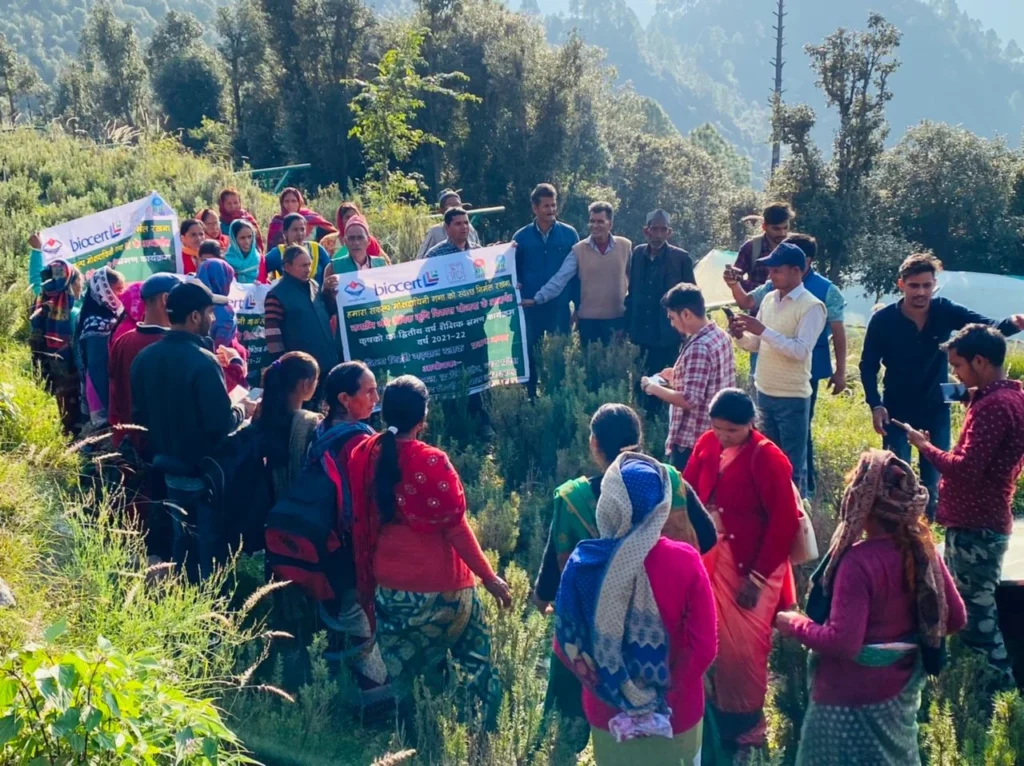
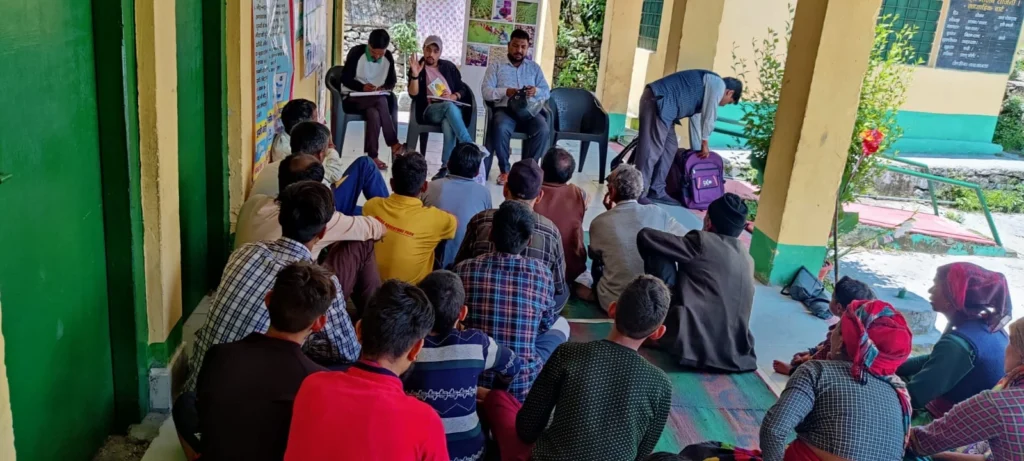
DKVS adopts a participatory development model. Before implementing any livelihood program, we conduct:
- Village-level consultations
- Needs assessments
- Resource mapping exercises
- Community planning meetings
Development is sustainable only when communities are involved in planning and implementation. By building trust and ownership, DKVS ensures that initiatives continue beyond project timelines. (Reviving Rural Livelihoods in the Himalayan Region)
🌍 Toward Self-Reliant Villages
The long-term vision of DKVS is to create self-reliant Himalayan villages where:
- Agriculture is productive and sustainable
- Youth are economically engaged
- Women lead micro-enterprises
- Natural resources are conserved
- Local markets are strengthened
Reviving rural livelihoods is not a short-term intervention—it is a long-term commitment to inclusive and equitable growth. Through collective effort, resilience, and community leadership, Himalayan villages can transform into thriving centers of sustainable development. (Reviving Rural Livelihoods in the Himalayan Region)