
🌊 Introduction
Water Conservation and Natural Resource Management, water is the lifeblood of our Himalayan communities. In the rugged terrains of Uttarakhand, every aspect of our existence—from the smallest kitchen garden to our vital livestock and daily household needs—revolves around the health of our natural springs, streams, and seasonal rainfall. However, as environmental patterns shift and human demand grows, the pressure on these delicate resources has never been higher.
At Dhar Kshetriya Vikas Sansthan (DKVS), we believe that development cannot happen at the expense of our environment. By championing water conservation and community-led natural resource management, we are ensuring that the prosperity we build today doesn’t drain the resources of tomorrow. (Water Conservation and Natural Resource Management)
🌄 Understanding Water Challenges in Mountain Regions
Mountain ecosystems are fragile and highly sensitive. Our communities face a unique set of obstacles:
- The Spring Crisis: A noticeable decline in the flow of traditional water springs.
- Erratic Weather: Unpredictable rainfall patterns that make traditional farming schedules unreliable.
- Runoff and Erosion: The steep terrain means that precious topsoil and water are often lost to erosion rather than being absorbed.
- Rising Demand: As village populations and agricultural activities grow, the competition for limited water increases.
DKVS identifies these not just as environmental issues, but as livelihood risks that require immediate, community-centered action.
💧 Promoting Water Conservation Practices
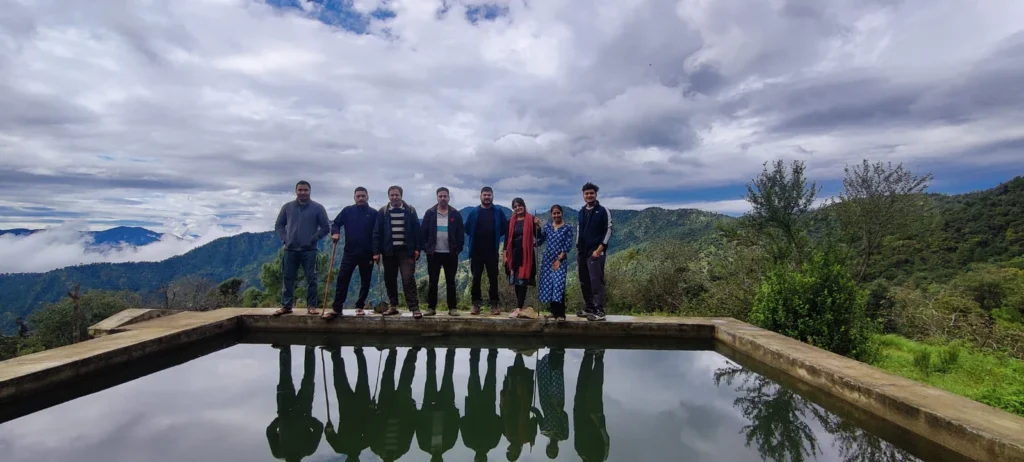
We believe in “simple science” that every villager can implement. Our approach focuses on capturing and retaining every possible drop: (Water Conservation and Natural Resource Management)
- Rainwater Harvesting: Building small-scale collection systems to store water during the monsoon for the lean months.
- Soil Moisture Conservation: Using mulching and traditional ground-cover techniques to keep the earth hydrated longer.
- Spring Protection: Creating “recharge zones” around our natural springs to ensure they remain active throughout the year.
🌱 Soil and Land Resource Management
Water conservation is only as good as the soil that holds it. We teach that healthy, organic soil acts like a sponge. DKVS promotes: (Water Conservation and Natural Resource Management)
- Contour-Based Farming: Creating barriers along the slopes to slow down water runoff and prevent erosion.
- Vegetative Barriers: Planting local grasses and shrubs that “lock” the soil in place.
- Organic Enrichment: Using compost and organic matter to build soil structure, which significantly increases its water-holding capacity.
🌾 Linking Water Conservation with Agriculture
To ensure the future of farming, we must align our crops with our water availability. We encourage: (Water Conservation and Natural Resource Management)
- Crop Diversification: Shifting toward plants that are naturally suited to mountain conditions, such as our high-value Aromatic and Medicinal Plants (Lavender, Rosemary, Thyme, Oregano), which are efficient water users.
- Efficient Irrigation: Moving away from flood irrigation toward precision methods that deliver water directly to the plant root.
🌳 Protecting Forest and Natural Ecosystems
Our forests are our greatest water-storage infrastructure. DKVS works to mobilize the community in: (Water Conservation and Natural Resource Management)
- Forest Stewardship: Protecting the “catchment areas” where our water sources originate.
- Controlled Grazing: Managing livestock movement to prevent the over-trampling of young forest seedlings and the resulting soil compaction.
- Biodiversity Conservation: Encouraging the planting of native mountain tree species that are known to recharge groundwater.
👩 Community Participation: The “Water Parliament”
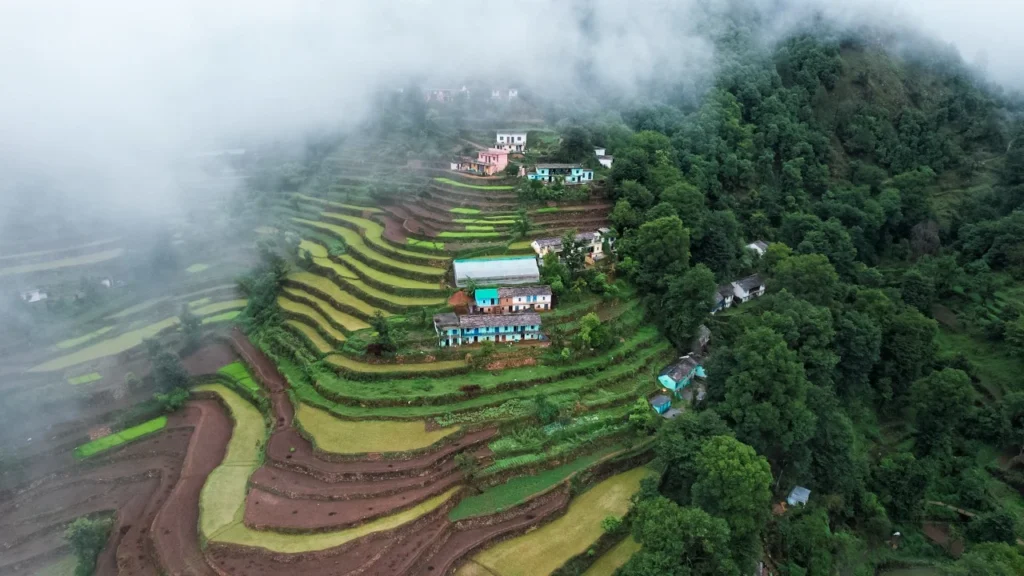
Infrastructure without ownership is useless. We encourage every village to form Resource Management Committees where: (Water Conservation and Natural Resource Management)
- Traditional Knowledge meets Modern Science: We combine the wisdom of village elders with modern hydrological mapping.
- Collective Monitoring: The village tracks the health of its springs and forests together.
- Local Guidelines: The community creates its own rules for water sharing to ensure no one is left thirsty.
🌍 Strengthening Resilience
Natural resource management is the ultimate insurance policy. When a village protects its springs, forests, and soil, it becomes “drought-proof.” This creates:
- Stable Livelihoods: Consistent water means consistent harvests.
- Economic Security: Farmers can plan for the future rather than worrying about the next dry spell.
- Ecological Stability: Preventing the land degradation that often leads to landslides and other disasters.
🌟 Vision for Sustainable Resource Stewardship
We envision a Himalayan landscape where:
- Springs flow year-round because the forests protecting them are thriving.
- Agriculture is in sync with the natural water cycle.
- Future generations inherit a land that is more fertile and water-secure than the one we have today.
🌿 Conclusion
Water conservation is not just an environmental project—it is a social contract with the future. By protecting our natural resources today, we are ensuring that the village remains a thriving, self-reliant home for our children. (Water Conservation and Natural Resource Management)
When natural resources are protected, livelihoods flourish. When water is conserved, the future is secured.